
Helpers in the Mess of Ministry
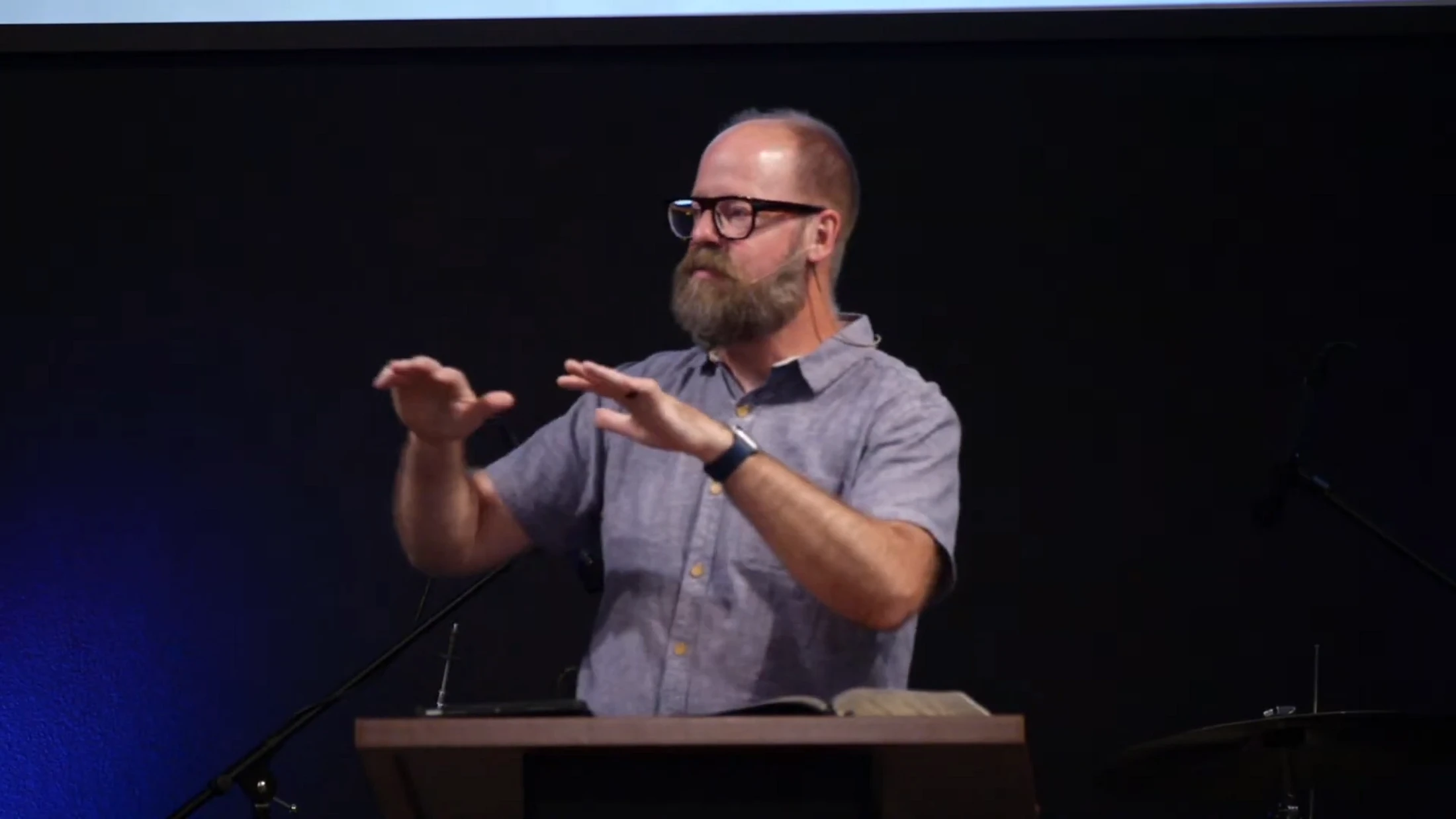
I have very good news for all of you — I have about 75 or 80 minutes worth of material. I'm going to try and bring that down to something reasonable.
Let's go to 2 Timothy chapter 4. If you're visiting with us or new here or haven't been here in a while, we have been slowly making our way through Second Timothy. We're almost at the end, and today we're looking at verses 9–15.
Second Timothy is a letter from the Apostle Paul to his friend and disciple in ministry. It's the last letter we have that Paul wrote. It's at the end of his life and ministry, and so a lot of what he says here is very personal to Timothy and also reflects the situation Paul is in at the end of his life.
2 Timothy 4:9–15: "Do your best to come to me soon. For Demas, in love with this present world, has deserted me and gone to Thessalonica. Crescens has gone to Galatia, Titus to Dalmatia. Luke alone is with me. Get Mark and bring him with you, for he is very useful to me for ministry. Tychicus I have sent to Ephesus. When you come, bring the cloak that I left with Carpus at Troas, also the books, and above all the parchments. Alexander the coppersmith did me much harm. The Lord will repay him according to his deeds. Beware of him yourself, for he strongly opposed our message."
Now, you might wonder how you get 75 minutes worth of material out of that. If you wonder that, you severely misunderstand the mind of a preacher.
First, I want to paint a picture of what Paul is asking Timothy. He's at the end of this letter, getting to the personal notes and greetings. Here's what's going on: Paul is in Rome under house arrest. We talked last week about how he's anticipating his imminent execution — he perceives that he is at the end of his life and about to be executed. Timothy, on the other hand, is across the northeastern part of the Mediterranean in Ephesus. Paul wants Timothy to try his hardest to get to him as soon as possible, because at the end of Paul's life, as we see here, he is isolated and lonely.
Demas, a close friend in ministry, has deserted him. Crescens and Titus have had to leave to pursue other ministry needs elsewhere. Luke is the only one left with him.
On his way to see Paul, Paul wants Timothy to do a few things. First, he wants him to pick up Mark and bring him along. He's also letting Timothy know that he doesn't need to worry about leaving the church in Ephesus — Tychicus, who is possibly even the individual who delivered this letter, is going to stay in Ephesus and assume pastoral responsibilities there. So Timothy wouldn't have to abandon the church to come to Paul.
Also, on the way from Ephesus to Rome, Timothy will pass through the city of Troas, where Paul had previously lived. Many scholars believe Paul was arrested there and had to leave behind certain important belongings. He wants Timothy to pick those up and bring them to Rome.
But while traveling through Troas, Timothy needs to be on the lookout for Alexander the coppersmith, who is up to no good. He had caused Paul great harm, and Paul wants Timothy to beware of him because he can be very hostile toward Christian missionaries.
These might seem like purely personal comments that only relate to Timothy. How could they relate to us? What value could they have beyond some historical biographical notes?
Well, on the surface, you can see that Paul's life relates to ours in one simple way: life rarely goes the way you want it to. But that doesn't mean you give up and stop doing what God has called his church to do — to be productive in ministry and obedient to the Great Commission.
I've been in ministry long enough now that I can say I've been doing this for decades. One preaching book I read encouraged pastors to ask of their sermons: what is the intended redemptive effect? Basically — what does God want this sermon to get done? What effect should it have on our lives?
So as we look at this snapshot of Paul's life at the end of his ministry — things not going the way he might have envisioned, lots of challenges and mess all around him — what I hope this sermon gets done is to help us realize that ministry chaos makes ministry focus more important than ever. Ministry chaos is an inevitability. We live in a fallen, sinful world. There are going to be problems. As we read in Psalm 40, we're going to be in the mire. But even in the chaos, even when life isn't going the way we want, ministry goes on. And so it's more important than ever that we collectively be doing the things God has called us and equipped us to do.
Paul is at the very end, and life is not getting easier — it's getting harder. He's under house arrest. The people who were with him aren't with him anymore. He's anticipating execution. We tend to imagine going out gently at the end of life — things getting easier as we near the end. But that's not what's happening for Paul. He needs help, and he's essentially alone. Not to shortchange Luke, who has been a faithful traveling companion — but Paul needs support. Ministry support, personal support, moral support.
Yet Paul also realizes that his needs are not the only challenges facing the church. He's not saying, "I'm the most important person on earth, so everyone needs to attend to me." In fact, what we see is that there are so many other issues, people, churches, and ministries concerning Paul even as he's feeling his own pressure and weakness. So how does a healthy church function as God designed it to — meeting the needs of the moment even when life is chaotic?
I think in these simple comments Paul makes to Timothy, he reveals several ministry insights that help us know how to live when life is chaotic.
The first is this: Christians are social creatures.
By design, we are not meant to be isolated and alone. This is simply part of human nature. Go back to the Garden of Eden — one of the first things declared about Adam is that it is not good for man to be alone.
Paul has been through all sorts of ministry challenges. Those of you in the 9:00 service going through Acts are hearing chapter after chapter of the ordeals Paul endured. In Second Corinthians and First Corinthians, he outlines some of his own personal struggles. He has proven himself resilient, determined, thick-skinned — able to continue in the face of opposition, hostility, and physical danger. But don't mistake Paul for a lone wolf.
We use that term as if it's a symbol of fierce independence. But in nature, a lone wolf is in trouble. Wolves are pack animals. If you're a wolf by yourself, your whole system for securing food and staying safe is gone. Where you were a predator, you are now easy prey. Paul is not suggesting that the lone wolf way is the way to go.
Christians are not so different. Solo ministry, while possible, is far from ideal. We're meant to minister alongside companions. This is more desirable and more effective. The whole dynamic of mutually supporting spiritual gifts that Paul addresses in Ephesians and 1 Corinthians makes this clear — not everyone has all the gifts, and we're meant to use our gifts not for our own benefit but for the benefit of others. You have this strong support network of complementing giftedness so that, as we function as intended, we accomplish the mission and ministry together. We support one another, encourage one another, and build one another up as we each deploy the gifts God has given us. But if you intentionally extract yourself from that network — or are forced out of it — that becomes a serious problem.
We're meant to be social creatures. We're meant to work within the fellowship of the body of Christ.
So Paul, in isolation in Rome, needs people. He needs helpers. He needs someone to come alongside and supply what is lacking in his own life. And so he calls for Timothy with a sense of urgency. My ESV says, "Do your best to come to me soon" — but even that doesn't fully express the urgency the Greek language conveys. Paul is on the brink of desperation. This needs to be a top priority for Timothy.
As important as the ministry in Ephesus is, it's going to be taken care of. And Timothy is someone Paul needs — one of his true children in the faith, someone who has served alongside him in all sorts of situations. The one who groomed and raised up Timothy now needs Timothy to come and support him. This kind of reciprocal ministry friendship and companionship is deeply needed.
And this isn't just a pastor saying, "The congregation needs to pull their weight." Nor is it simply the reverse — that the membership needs the spiritual guidance of a faithful pastor. Both of those things are true, but this is really about something broader: we all need the life-on-life support of Christian community. We need one another.
I hope that when you show up on Sunday morning, you're genuinely excited to see people come through that door. That you're saying, "Oh, this person's here — let me give them a hug, let me pray with them." And I hope that when someone's not there, you're thinking, "Where are they? I need to call them, text them." I hope it's not just a Sunday morning thing, but that it's going on throughout the week — calling, praying, sharing experiences, being involved in each other's lives. Bearing one another's burdens. Praying with and for one another. Supporting each other as we attempt to be obedient to Christ's Great Commission.
Too often — and I know you've seen this — when life gets hard, our instinct is to withdraw. "I just can't be around people. It's too much." When really, the opposite is what we need. We convince ourselves that we just need to pull the blankets over our heads and turn the lights off. And maybe for a short time that's okay. But if it becomes the default, you'll find it harder and harder to get out there and live life. Before long, it becomes debilitating. Rather than withdraw from fellowship, we need to lean on it as God intends.
The second insight: desertion is damaging.
Paul mentions Demas — that Demas, having loved this present world, has deserted him and gone to Thessalonica. You can hear a sadness in his voice as he writes this. Demas had been a ministry companion, a fellow servant of the Lord. They had done lots of ministry together. He's mentioned in other letters as a faithful part of Paul's team. And so to hear that he's simply hung it up — that he's going to go do what everyone else is doing and step away from ministry — you can almost hear the discouragement.
One of the reasons Paul needs Timothy is because one of his faithful ministry partners has just left. We shouldn't necessarily read this as Demas renouncing his faith. John Calvin, commenting on this passage, offers a charitable interpretation — that Demas remained a Christian but simply preferred the comforts of earthly pursuits rather than the struggles of Christian ministry. Paul had been talking about how hard this is, how much opposition you'll face, how many people won't like what you have to say. Calvin suggests Demas just got tired of it. It was easier to do other things.
But whether Demas completely abandoned his faith or simply couldn't be troubled to do the work of ministry anymore — it was damaging and discouraging to Paul either way.
This happens all the time in the church. People get tired of the work. They get tired of the struggles of ministry, because the work of ministry is unrelenting. The troubles are not going to end until Christ returns. It's much like being a doctor — there will always be more sick people. So people trade it in for things that are easier. There are so many people today who have decided that the temporary distractions of this life may not be truly good, but they're good enough. "I just don't have the energy. I just don't have the time. I just don't have the bandwidth." So they head to the lake instead.
And here's the thing — Christianity is rooted in grace. If there's no grace, there's no Christianity. I have no doubt Paul would have loved nothing more than for Demas to realize his mistake and come back. Because the needs of the church demand that we do the work of ministry. And we are a people of grace. Have any of us never made mistakes? Most of us are grateful when we get second chances. When we come back and say, "I blew it, I shouldn't have done that," and people say, "Come on in — what are you doing? Let's get back at it." That's a beautiful thing.
But don't think that if you were to simply walk away, it wouldn't be hurtful — personally and to the ministry. You are valued. You are needed. Desertion is damaging.
Third insight: ministry must go on.
The gospel call Christ placed on his church doesn't end just because Paul is at the end of his life and still going through hardship. It's not as if everything gets put on pause and all eyes and energy are focused on the Apostle Paul. That's not what happened. That's not what Paul wanted.
So even though he's trapped in Rome, under house arrest, desperately desiring fellowship with other Christians — his needs don't trump the needs of the Great Commission. While Demas deserting him is damaging and difficult, Crescens and Titus leaving him to do ministry in other places is a good thing. Something that has to happen.
Paul can't say, "They don't need you in Galatia as much as I do, Crescens. Titus, they don't need you in Dalmatia as much as I need you — just call in sick and hang out with me." No. There is a constant need for people to go and serve — to serve their Savior and meet the needs that exist everywhere. Not because they're deserters who can't handle being with Paul, but because there are people who need shepherds in these other places. And so they go.
Don't hear this as Christ not caring about Paul's hurts or needs. Scripture says he is an ever-present help in times of need. But the work of the church cannot come to a screeching halt whenever we are in pain or struggling with the circumstances of our lives.
Paul had Luke. He needed Timothy and Mark. But the very first command of the Great Commission is what? Go. Go out to where the needs are.
We at Grace Fellowship understand this. We live in the shadow of Travis Air Force Base and UC Davis. We relate all the time to having people come here — they get sent to Travis, or they're going to the university — and then eventually that season ends and they go somewhere else. They're not deserting us. They're being sent out because of the circumstances of life. Other times, people are sent out because there's a specific calling on their life. Even though this is home and it's comfortable and they love the people here, God has put a burden on them for ministry elsewhere. Think about the missionaries we support in South Asia — they're as far from home as you can almost get. But the gospel need is so great, and they feel called to that mission field. They would love to be near family, to raise their children around aunts and uncles and cousins. But there's a call on their life, and they're compelled to go.
Paul's needs — and even our own needs — cannot be what keeps people from being sent out to serve the Lord. The ministry must go on.
Fourth insight: people can change.
Thank God people can change. I look back at my own life and what I once was — I am grateful I am no longer that person. I've grown and matured by the grace of God. I think we've all experienced that.
In verse 11, after noting that Luke alone is with him, Paul says: "Get Mark and bring him with you, for he is very useful to me for ministry." If you know anything about the relationship between Paul and Mark, that might surprise you.
Mark had been traveling with Paul and Barnabas earlier in Paul's ministry, on the first missionary journey. About halfway through, Mark decides he needs to go home. He misses Jerusalem, so he leaves. Eventually, when Paul and Barnabas are getting ready to go out again, Barnabas says, "Let's go get Mark." Paul says, "Absolutely not. That guy left us." Acts tells us there arose a sharp disagreement between them over Mark — so sharp that they parted ways. Paul took Silas. Barnabas took Mark. And that's the last we read of any interaction between them and Paul.
Many have concluded that Paul simply wrote Mark off as a flake — a ministry liability. When the going gets tough, who knows what he'll do?
But somewhere along the way, perhaps while serving with Barnabas, Mark developed as a follower of Christ. He came to understand his role in Great Commission work. And Paul — by whatever exposure he had, or simply by observing — came to see him as a valuable asset. Someone who had changed. Who had grown. Who had matured. Where he couldn't be relied on in the past, now he is needed. Paul wants him.
It's a great reminder not to be quick to dismiss people. Maybe Barnabas saw something in Mark that Paul didn't — and thought, "I can't just let this guy go. I'm going to bring him along and invest in him." Maybe that's what happened. Either way, Paul came to see it too.
We need to let God's sanctifying resources — his Word, his Spirit, and the work of fellow believers in each other's lives — grow and mature people, even when they seem like hopeless cases. People can and do change by God's grace.
Fifth insight: learning is always relevant.
Paul is at the end of his ministry. He believes he's going to be executed imminently. And yet, as he gives instructions to Timothy, he says: when you come through Troas, bring my cloak — that makes sense, it'll be cold — but also bring the books, and above all the parchments.
What? Why would someone approaching the end of his life need to keep reading? Keep studying? Keep writing?
We've been making our way through Psalm 119 in our Scripture readings — that great celebration of God's Word and what a treasure it is. Paul is a true believer whose greatest desire is to know Christ more deeply and more richly every day. And that desire is not going to end. Not while he still has breath. When he reaches glory, he'll want it more than ever.
Studying God's Word is central to our pursuit of knowing God. Studying doesn't always feel relational — often it's something done alone. But when you're studying God's revelation of himself to his people, that study becomes a window into the heart of God. For Paul, there is a desperation to have as many resources as possible available for however long he has left. Most scholars think he's asking for his copies of Scripture and the notes he's taken over years of ministry.
Paul wanting to go out studying Scripture tells us this was more than mere academics. He understood the supreme value of God's Word and wanted to use every remaining moment investing in his relationship with the Lord.
When Jonathan Edwards was in his late teens, he wrote his famous resolutions — 70 of them, about how he committed to live his life. Two of them are particularly fitting here. The first: "Resolved to study the Scriptures so steadily, constantly, and frequently, that I may find and plainly perceive myself to grow in the knowledge of the same." The second: "Resolved never to lose one moment of time, but improve it in the most profitable way I possibly can." Put those two together, and you see someone committed not to casually browse his Bible, but to pursue it constantly and consistently — always growing in his relationship with the Lord and his knowledge of Scripture.
We see that same commitment in Paul's simple request to bring his books and parchments. His desire to keep studying God's Word, to know it better and more deeply, and in so doing, to know God better and more richly. Learning — and specifically learning the Scriptures — is always relevant. Whether you are a brand-new believer or you are anticipating drawing your last breath.
Sixth insight: know your limits.
There's this man, Alexander the coppersmith. He's previously mentioned in 1 Timothy 1:20, alongside a man named Hymenaeus, and their reputation is that they are blasphemers. But clearly Alexander is more than just someone taunting Christians. He is calculating and effective. He has caused Paul great harm. And Paul is almost fearful on Timothy's behalf — anticipating what might happen if Timothy should cross paths with this man.
We're Americans. We like our bravado. We're tough, nobody can knock us off course, we can handle any challenge, we don't need any help. But that's not really true, is it? You don't have to look very deep into any of our lives to see that's mythology. We suffer defeat all the time. We are often outmatched by the opposition we face.
Paul understands that both he and Timothy have their limitations. He's in no position to put Alexander in his place. Timothy is likely to be harmed too if he encounters this man. So the instruction is simple: be on the lookout. Be aware of him. Don't engage. Stay away.
Paul gives similar instructions in several other places. In Romans 16:17, we're told to avoid those who are divisive in their teaching — those who teach doctrine contrary to orthodoxy — because they have the potential to break apart the church. In 2 Thessalonians 3:6, we're told to withdraw from Christians who are idle and unruly. In Titus 3:10, we're told to reject divisive people who refuse correction. There's a clear pattern in Scripture: certain types of people are best kept at a distance.
In other words — you don't need to engage every debate. You don't need to counter every attack or every false claim. You don't always have to go after everyone who tries to bring ruin to the church. Sometimes the best thing is to get away from them, or get them away from you. Sometimes it's best to let them go and trust that God will serve his justice in his perfect time. That's exactly what Paul says here: "The Lord will repay him." He's trusting the justice of God. Paul doesn't need to do anything. Timothy certainly doesn't need to take it on himself to engage this man. Keep your head down, keep making your way to Rome, and trust God with the rest.
Now, I'm not saying you can only engage if you're 100% sure you'll come out victorious and unscathed. Sometimes you do need to stand up for the truth of God even when it's likely you'll be hurt in the process. Spiritual warfare is rarely safe. But there's no need to be reckless in the name of fighting the good fight. You don't have to jump into the middle of every scrum. Sometimes you can just trust God and let him take care of it.
So what are we to take away from all of this? A couple of things to carry with you.
First — don't expect comfort and ease just because you're doing the Lord's work. That's often what's promised in certain circles: if you're just faithful and obedient, it'll be smooth sailing. That can be deeply disillusioning when it turns out not to be true. Look at Paul's life. It was none of those things.
But even in the midst of chaos and setback, God still accomplishes his purposes through his people. Understand your limitations. Find joy in using the resources God has provided to magnify his glory. And do it all the way to the end of your life.
Let's pray.
Dear Lord, thank you for the faithfulness of the Apostle Paul. Even as he is so open and honest about his own limitations, his own regrets, and his own failings, he is still a remarkable model of what it looks like for a flawed person to be faithful to your commands. That's encouraging — because we are all aware of our own flaws and failures. To know that if Paul can do it, if Peter can do it, then we can too. Not in our own strength, but only in the strength that you provide. Thank you for the resources you give us — the fellowship of believers, your Holy Spirit working in our lives, the power of your Word and prayer. We desperately need all of those things in order to succeed, Lord. But thank you that we can and should be faithful to you, even when life is messy all around us. Help us to remind ourselves of that regularly so that we can get back in the trenches. In your name, amen.